ADEPT | Gagauzia 2016 | Presidential 2016 | Elections 2015 | Bashkan 2015 | Gagauzia 2012 | Political Parties
Republican Constitutional Referendum of September 5, 2010
Results of the Referendum
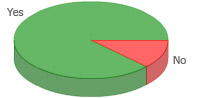
Referendum of September 5, 2010 was not validated due to low voter turnout. Only 30.29%* of citizens having the right to vote out of the required minimum voter turnout of 1/3 of citizens included in the voter lists participated in elections[…]
* This is the official voter turnout announced by the Central Electoral Commission. This percentage results from deducting the number of voters from abroad (19,705) from the number of citizens included in the voter lists. Another voter turnout — 30.07% — results after carrying out mathematical calculations on detailed data on voter participation provided by CEC.
Participants at referendum
Democratic Party of Moldovasupported option “For”
“Moldova Noastra (Our Moldova)” Alliancesupported option “For”
Liberal Partysupported option “For”
Liberal Democratic Party of Moldovasupported option “For”
“Actiunea Europeana (European Action)” Movementsupported option “For”
Popular Republican Partysupported option “For”
National Liberal Partysupported option “For”
Republican Party of Moldovasupported option “For”
Ecological Party of Moldova “Alianta Verde (Green Alliance)”supported option “For”
“Pentru Neam si Tara (For Nation and Country)” Partysupported option “For”
Humanist Party of Moldovasupported option “For”
Roma Movement of the Republic of Moldovasupported option “For”
National Romanian Partysupported option “For”
Labour Partysupported option “For”
“Moldova Unita (United Moldova)” Partysupported option “For”
Socialist Party of Moldovasupported option “For” *
Centrist Union of Moldovasupported option “For”
Party of Communists of the Republic of Moldovaurged to boycott the referendum *
“Ravnopravie (Equality)” Movementurged to boycott the referendum *
Christian Democratic People’s Partysupported option “Against” *
Party of Socialists of Moldova “Patria-Rodina (Motherland)”urged to boycott the referendum *
Conservative Partysupported option “Against” *
“Forta Noua (New Force)” Movementsupported option “Against” **
“Patriots of Moldova” Partysupported option “Against”
Social Democratic Partyurged to boycott the referendum
* When registering as participant in the referendum did not express officially its position, however in public appearances pleaded for the corresponding option.
** When registering as participant in the referendum did not express officially its position, however in public appearances pleaded for the corresponding option presenting arguments that the procedure for reviewing the Constitution through referendum creates a precedent, which might have negative consequences in the future; the decrease in the election threshold would reduce representativeness and legitimacy of the referendum and of the decisions approved thereafter. In 2000 the leader of “Forta Noua” Movement voted for the constitutional reform and for the election of President by Parliament.
Referendum holding procedure
On June 18, 2010 the Parliament adopted amendments and additions to the Electoral Code, including the ones pertaining to the Republican Constitutional referendum:
- There has been established that the review of the Constitution of the Republic of Moldova may be subjected to a Republican referendum (Art.146);
- The time frames for holding the Republican referendum were reduced: from 120 days down to 60 days before or following the day of holding the parliamentary and nationwide local elections (Art.145);
- The election threshold for the Constitutional referendum was decreased (Art.171): from 3/5 down to 1/3 of the total number of voters (persons registered in the voter lists);
- The number of votes required for a decision (law) subjected to a referendum to be considered as adopted was lowered (Art.168): from 1/2 of the total number of voters — down to the majority of voters, who participated in the referendum.
Procedure of organizing and holding the Republican referendum is similar to the one used for general elections:
- Central Electoral Commission is the main body responsible for preparing and executing the electoral actions;
- The territory of the country is divided into administrative electoral circumscriptions (of levels 1 and 2) and into polling stations. Besides, polling stations will be open abroad (both at the diplomatic missions and outside);
- The electoral bodies are set up (circumscription councils and polling stations bureaus);
- Voter lists are prepared, including for citizens eligible to vote residing abroad;
- Political parties are not registered as electoral contestants in the referendum, but they can register as participants in the referendum, CEC requiring them to declare their position via two options: “yes (for)” or “no (against)”;
- Advertising may be placed in public and private mass-media (paid and/or free of charge), debates on the issue subjected to a referendum are organized;
- Electoral process may be monitored by the national and international observers and mass-media representatives;
- Citizens shall vote based on the identity cards in compliance with the Electoral Code (same as for general elections), while the external voting is possible only by presenting the passport or sailor’s card;
- Voting takes place over one day, between 07:00–21:00 (voting can be extended by maximum two hours at certain polling stations);
- Totalisation of the republican referendum results shall be carried out by CEC within five days.
Following the referendum, the Constitutional Court shall confirm the referendum results within 10 days as of receiving the acts from CEC. In the event that the Law subjected to the constitutional referendum is adopted, this law becomes a constitutional law and enters into force as of the date of its publication in the Official Gazette (Monitorul Oficial).
Context of the constitutional referendum of September 5, 2010
Following the April 5, 2009 parliamentary elections and the July 29, 2009 early elections, the Parliament ought to elect the President of the Republic of Moldova. However, in 2009 all 4 attempts to elect the Head of the State by the Parliament failed.
Against the background of reciprocal accusations between the power (Alliance for European Integration) and opposition (PCRM), numerous efforts have been made to resolve the situation in the succeeding period (December 2009 — July 2010): • amendments to and interpretations of laws; • appeals to the Constitutional Court with respect to requests for certain interpretations and clarifications; • creation of a constitutional commission designated to draft amendments to the Constitution; • drawing up a new Constitution; • elaboration and registration of some draft laws on amending the Constitution with respect to the chapter on the procedure of electing the Head of State (direct or indirect, with a successive decrease of the minimal required number of votes); • involvement of international structures into conflict mediation (Council of Europe, Venice Commission, European Union). Attempts to resolve the political crisis by the Parliament with or without amendment of the existing constitutional and legal framework did not succeed, both parties (power and opposition) staying firm on their different positions and approaches. Negotiations with external mediators and inside the governing alliance led to a solution, which may be called as “extreme” one: direct citizen involvement via declaration of a constitutional referendum.
On July 6, 2010 the Constitutional Court approved the initiative of reviewing the Article 78 of the Constitution of the Republic of Moldova via the constitutional referendum, while on July 7, 2010 the Parliament adopted a Decision on holding the Republican Constitutional referendum on September 5, 2010.
Laws and Relevant Regulations
Legal regulations relevant for preparation, conduct and monitoring of the September 5, 2010 Referendum[…]
Informative Bulletin
News about the main events concerning the campaign for constitutional referendum[…]
Commentaries
- Lessons of the constitutional referendum held on September 5, 2010. Post-referendum analysis
Nicolae Panfil, September 30, 2010 - The results of the constitutional referendum held on September 5, 2010, namely the massive absenteeism of citizens to the ballot boxes which caused the failure of the referendum, brought back a topical question: who is responsible for civic/electoral education of citizens?[…]
- The consequences of failed referendum
Igor Botan, September 20, 2010
Monitoring of the Referendum
Reports and analysis concerning organization and holding the referendum, the voting day and the post-referendum period[…]
See also
Election of President of the Republic of Moldova from November 10 and December 7, 2009
Election of President of the Republic of Moldova from May 20 and June 3, 2009